

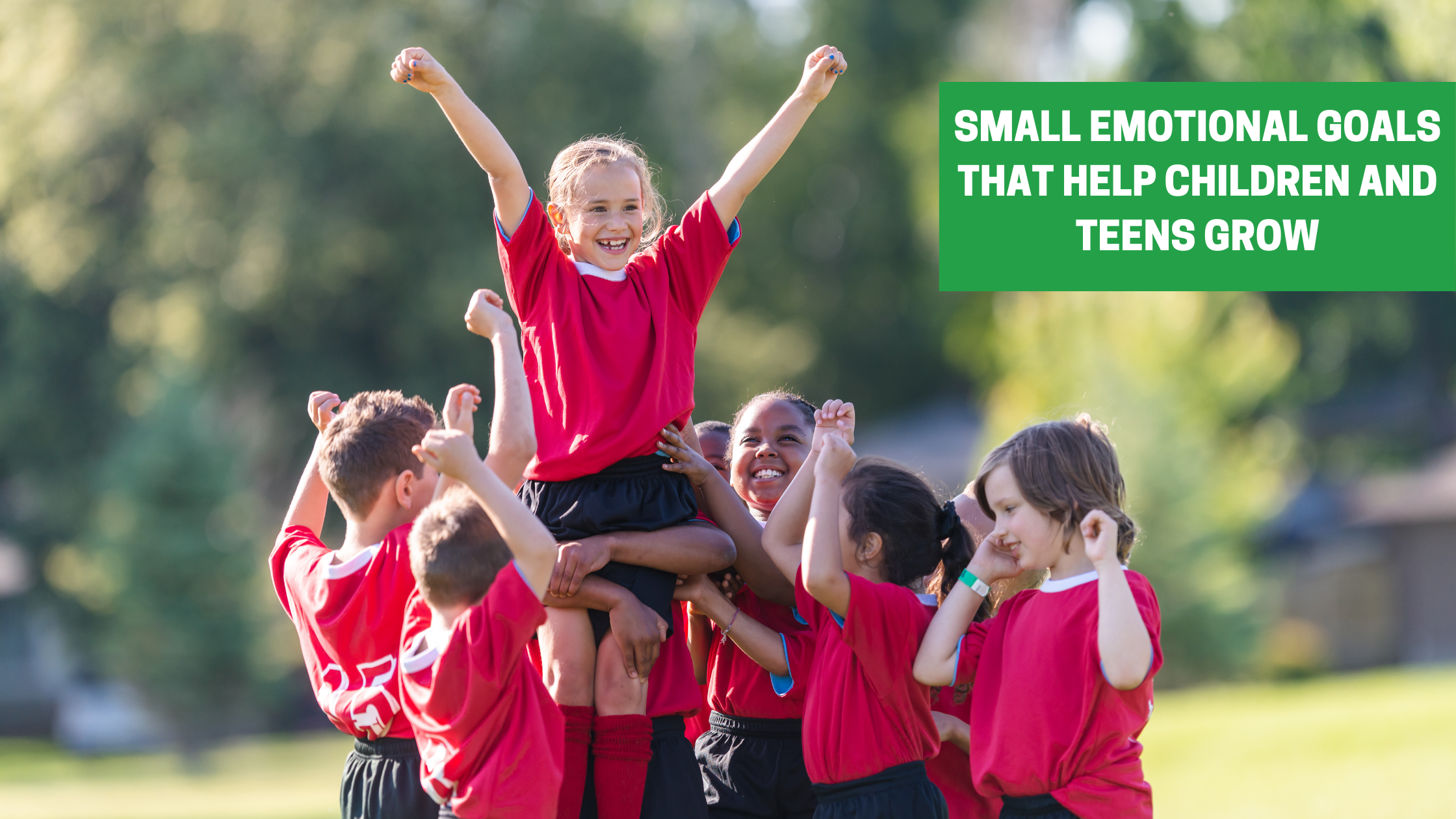
Teaching a child to ride a bike or tie their shoes are visible milestones we celebrate. But just as important are the quieter, internal milestones of emotional growth. Helping children and teens develop emotional skills is one of the most fundamental ways we can prepare them for a healthy, resilient future. For kids in various family structures, learning to navigate their feelings is a critical tool for stability and self-awareness.
Setting small, achievable emotional goals creates a foundation for lifelong well-being. These goals aren’t about achieving perfection; they’re about making steady progress! By focusing on simple, age-appropriate skills, you can empower the children in your care to understand themselves and the world around them.
Goal 1: Learning to Name Feelings
Before children can manage their emotions, they must first be able to identify them. This starts with building a rich emotional vocabulary that goes beyond “happy,” “sad,” and “mad.”
For Young Children:
Use a feelings chart with different facial expressions. When they seem frustrated, you can point to the chart and say, “It looks like you might be feeling frustrated. Is that right?” You can also label feelings in books or movies you watch together. Saying “That character seems worried” helps them connect words to emotions in a low-pressure way.
For Older Children and Teens:
Encourage more nuanced language. Instead of just “sad,” are they feeling disappointed, lonely, or discouraged? Talk about your own feelings in a healthy way. Modeling this behavior shows them it’s normal and safe to share. For instance, you could say, “I felt a little anxious about my presentation today, but I took a few deep breaths and it helped me.”
Goal 2: Developing Healthy Coping Skills for Frustration
Frustration is a universal experience, whether it’s over a tough homework problem or a disagreement with a friend. The goal is to teach children how to respond to frustration constructively instead of letting it completely overwhelm them.
For Young Children:
Create a “calm-down corner” with comforting items like a soft blanket, a stuffed animal, or coloring books. When they get upset, guide them to their corner to take a break. You can also teach simple breathing exercises, like “smelling the flower” (breathing in) and “blowing out the candle” (breathing out).
For Older Children and Teens:
Help them identify their personal frustration triggers and brainstorm healthy responses. This could involve taking a walk, listening to music, writing in a journal, or talking it out. The key is shifting from reacting impulsively to choosing a thoughtful action. Validate their feelings by saying, “I can see why that’s so frustrating,” before helping them problem-solve.
Goal 3: Building Confidence Through Small Wins
Confidence isn’t built overnight! It’s the result of countless small successes that prove to a child they are capable. For children who have experienced instability, these moments are especially powerful.
For Young Children:
Give them age-appropriate responsibilities, like helping set the table or feeding a pet. Praise their effort, not just the outcome. Saying “I love how hard you worked on that drawing” is more effective than “You’re the best artist.” This focuses on their perseverance, which is a skill they can control.
For Older Children and Teens:
Encourage them to try new things and pursue their interests, whether it’s a sport, a club, or a new hobby. Support them in setting and achieving small, personal goals. It could be finishing a chapter in a book or learning a new song on an instrument. Each accomplishment, no matter how small, adds to their belief in themselves.
Looking for More Guidance?
By focusing on small, consistent emotional goals, you provide the children and teens in your life with a powerful toolkit. You show them that feelings are manageable, challenges can be overcome, and they are strong enough to handle whatever comes their way! If you’re looking for guidance or resources to support the kids in your life, the Choices For Life team is by your side! Reach out today.